Mike discovered that men get breast cancer too – and his mission is to tell everyone else
My name is Mike Burrows, aged 71, from Ashbourne, Derbyshire. My story starts in October 2022 when I was 68. I had only just retired that August when I discovered a small lump under my arm on the side of my right breast.
After talking it through with my wife, we agreed I should contact my GP surgery. When I explained what I’d found, the receptionist asked me to hold the line while she spoke to a GP. She came back and said they wanted to see me the following day. When I arrived, I apologised in case I was wasting their time — especially with Covid restrictions still affecting surgeries and appointments being hard to get.
 After examining me, I was referred to the Royal Derby Hospital to see an oncologist the following week. When I arrived at the clinic, I noticed the sign above the entrance: “Breast Clinic.” It suddenly dawned on me that I was about to walk into a predominantly female space. I checked in and sat among all the other patients — I was the only man there, and I could feel the looks. It was my first appointment, and my wife wasn’t with me, so I felt even more out of place.
A nurse came over, introduced herself, and took me through. The oncologist examined the lump with ultrasound and decided a biopsy was needed. It was done there and then.
The following week, I returned for the results — this time with my wife. It was a good thing she was there, because the biopsy was positive. I remember staring at the floor while the doctor explained the next steps. All I could think was, I’ve got cancer. Surgery was booked for four weeks later, and I couldn’t wait to have it removed.
Challenges as a man with breast cancer
While waiting, I was referred for DNA testing at the familial clinic, as I had no family history to go on. The results came back showing no cancer‑related genes.
My GP also called me in for a mental‑health assessment — they recognised how stressful this period was, and I’m grateful they did. It helped to have someone else to talk to.
On the day of my operation, we arrived early and were taken straight into a private room. They explained this was because I was a male patient on a female ward. My surgeon came in, talked us through the procedure, and reassured us. He apologised that I would be moved to a surgical ward afterwards, as the breast cancer ward couldn’t accommodate men.
 I had my mastectomy that afternoon, stayed overnight, and went home the next day. My follow‑up treatment included five sessions of radiotherapy, and I was prescribed tamoxifen for five years — the same as female breast cancer patients in the UK.
The only real downside was the seroma — fluid build‑up around the breast. It’s not usually recommended to drain it due to infection risk, but in my case it was decided it needed to be done.
Since then, I’ve had regular check‑ups and physio to help with movement. It’s now 39 months since my operation, and I can proudly say I’m a cancer survivor. I still get some discomfort from skin tightness — partly from the reconstruction and partly from radiotherapy — but I’m here, and I’m grateful.
All the staff who looked after me were fantastic — my GPs, the Breast Care Team, the Physio Team, and everyone at Royal Derby Hospital. They supported both me and my wife every step of the way.
My Mission Now
Following my experience, I’ve made it my mission to raise awareness that men can get breast cancer too. You’d think it would be easier for men to spot changes — most of us shower using our hands, whereas many women use those fluffy puffy things. Men should be able to notice a lump straight away, but the key is acting on it. If you find something, don’t ignore it. Phone the doctor. Be positive and say, “I know men can get breast cancer, and I need to make sure this isn’t me.”
I’m now working closely with my local Breast Clinic, giving feedback on signage and helping them understand what it’s like for a man walking into a female‑dominated environment. They stay in touch with me regularly.
 I’m also part of the Men’s VMU (Virtual Meet‑Up) — a group of men who have or have had breast cancer. We meet online once a month to check in on each other, share experiences, and offer support. It’s been a lifeline, and it shows just how many men are out there dealing with this quietly.
One of the best ways to spread awareness is actually through women. Women already know about breast cancer — but many don’t realise men can get it too. If they know, they’re often the ones who’ll nudge their husbands, partners, brothers, or dads to get checked.
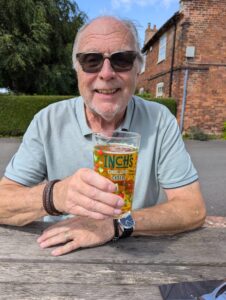 My story has now been covered by 12 online publications, as well as local radio and TV. I’ve been surprised by how many people — men and women — had no idea that breast cancer affects men.
How many men miss the signs?
During my surgery, they removed the sentinel lymph node to check if the cancer had spread. Thankfully, it hadn’t. But it made me wonder how many cancers in men start in the breast and go unnoticed — prostate, testicular, bowel, and others. Reported cases of male breast cancer are only 1%, but I can’t help asking: how many go undetected and travel through the lymph system to somewhere else?
Men don’t have much breast tissue, so lumps should be easier to detect — if they’re aware. And that’s why I’m speaking out. More needs to be done about male breast cancer awareness.