ABC Discover 2
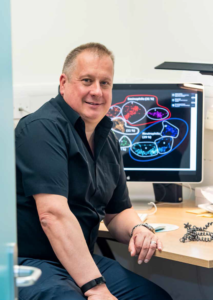 Location: University of Southampton
Dates: April 2025 – March 2030 Status: In Progress
Funding: £1,285,777
ABC’s Research Theme: Detection, Prevention, Therapies
Aims
ABC Discover 2, led by Professor Paul Skipp at the University of Southampton, aims to transform secondary breast cancer research across the three ABC research themes of detection, therapy, and prevention. ABC Discover 2 will utilise the DietCompLyf Biobank, which is now housed at the University of Southampton, to accelerate the multi-omics-driven programme of precision medicine and discovery of novel biomarkers to improve outcomes for breast cancer patients.
ABC Discover 2 builds on the success of the first ABC Discover programme (2019-2025), which developed multi-omics methodologies for the molecular characterisation of breast cancer, supported the creation of an early multi-cancer detection test, and established innovative approaches for the identification of novel targets for breast cancer vaccines.
ABC Discover also saw the successful transfer of ABC’s DietCompLyf biobank, a collection of samples and diet and lifestyle diaries from 3,390 breast cancer patients.
Using samples from the DietCompLyf biobank, ABC Discover 2 will:
- Generate evidence-based advice on how diet and lifestyle can affect breast cancer recurrence and survival
- Understand why some breast cancers become metastatic
- Identify risk biomarkers of recurrence and metastasis
- Revolutionise better, more effective, less toxic treatments
- Enable earlier detection of secondary spread breast cancer to improve survival
- Develop personalised vaccines and better immunotherapies for metastatic disease
Background
Working closely with the Centre for Cancer Immunology, the ABC Discover 2 research programme, led by Professor Skipp, Director of the Centre for Proteomic Research, will take place at the Integrative Molecular Phenotyping Centre (IMPC) at the University of Southampton.
The ABC Discover 2 Program brings together three work packages leveraging deep molecular phenotyping, multi-omics analysis, and innovative technologies to transform breast cancer detection, therapy, and prevention.
The biobank provides a world leading unique resource that will allow the discovery of predictive biomarker signatures for assessing and understanding the risks associated with developing secondary breast cancer, recurrence, and the influence of diet and lifestyle factors on disease progression. Central to ABC Discover 2 is Work Package 1 (WP1),“Deep molecular phenotyping of metastatic Breast Cancer”, which capitalises on the biobank. Using the latest multi-omics technologies, a range of molecule types including genes, proteins, and small molecules will be analysed and cutting-edge data analysis applied to discover useful new biomarkers and associated risk factors. These insights will help improve patient outcomes, guiding personalised strategies to reduce recurrence and enhance treatment efficacy.
Expanding on the advancements of miONCO-Dx™, a multi-cancer early diagnostic test developed during ABC Discover, Work Package 2 (WP2) seeks to assess miONCO’s potential as a non-invasive blood test for early detection of metastatic breast cancer and treatment response. Using the biobank and a collaboration with the prospective CANDO-4 study (with Professor Ellen Copson and Professor Ramsay Cutress, University of Southampton), this project will serve as a proof-of-concept study evaluating miONCO for the prediction of metastatic breast cancer risk and for monitoring treatment efficacy.
Work Package 3 (WP3) aims to enhance breast cancer vaccine development by addressing critical gaps in the discovery of novel vaccine antigen targets (neoantigens), essential for a robust immune response to tumours. Building on the foundations established in ABC Discover, Dr Ben Nicholas will further develop the in vitro efferocytosis model to advance the identification of both MHC-I and MHC-II neoantigens, for improving vaccine efficacy. Using triple-negative breast cancer cells and patient-derived samples, these neoantigens will be validated for their ability to activate cancer-directed T-cell immune responses. This approach has the potential to advance personalised immunotherapy and the prediction of neoepitopes for personalised immunotherapies.
Together the three integrated work packages will increase the impact of the ABC Discover 2 Programme, bringing together molecular phenotyping, early detection and immunotherapy development. They will maximise the use of resources and will pave the way for new precision medicine approaches tailored to breast cancer patients at high risk of recurrence and metastasis.
Potential benefit for patients
With the number of people living beyond a primary breast cancer diagnosis projected to rise substantially in the coming years, the need for earlier detection of recurrence has never been greater. Identifying biomarkers that predict an individual’s risk of secondary spread, alongside early detection tests such as miONCO, has the potential to transform clinical intervention and improve patient outcomes. ABC Discover 2 is helping identify patients who would benefit from enhanced monitoring or additional treatment, while also determining those who may not require continued follow-up. Furthermore, understanding how cancer behaviour is influenced by diet and lifestyle factors may generate evidence-based recommendations that patients can adopt to help reduce their risk of secondary breast cancer.
Publications
Comparative analysis of protein expression between oesophageal adenocarcinoma and normal adjacent tissue Nicholas B, Bailey A, McCann KJ, Walker RC, Johnson P, Elliott T, Underwood TJ, Skipp P. PLoS One. 2025;20(3):e0318572.
Comparative Analysis of Transcriptomic and Proteomic Expression between Two Non-Small Cell Lung Cancer Subtypes Nicholas B, Bailey A, McCann KJ, Johnson P, Elliott T, Ottensmeier C, Skipp P. J Proteome Res. 2025 Feb 7;24(2):729-741.
Characterising a 3D culture model of triple-negative breast cancer through systems-based molecular phenotyping. Luis Coy, (2024) University of Southampton, Doctoral Thesis, 282pp
What do cancer-specific CD8+ T cells see? The contribution of immunopeptidomics Nicholas B, Skipp P. What do cancer-specific CD8+ T cells see? The contribution of immunopeptidomics. Essays Biochem. 2023 Sep 28;67(6):957-965