Investigating how the tumour extracellular matrix drives immune suppression in triple-negative breast cancer
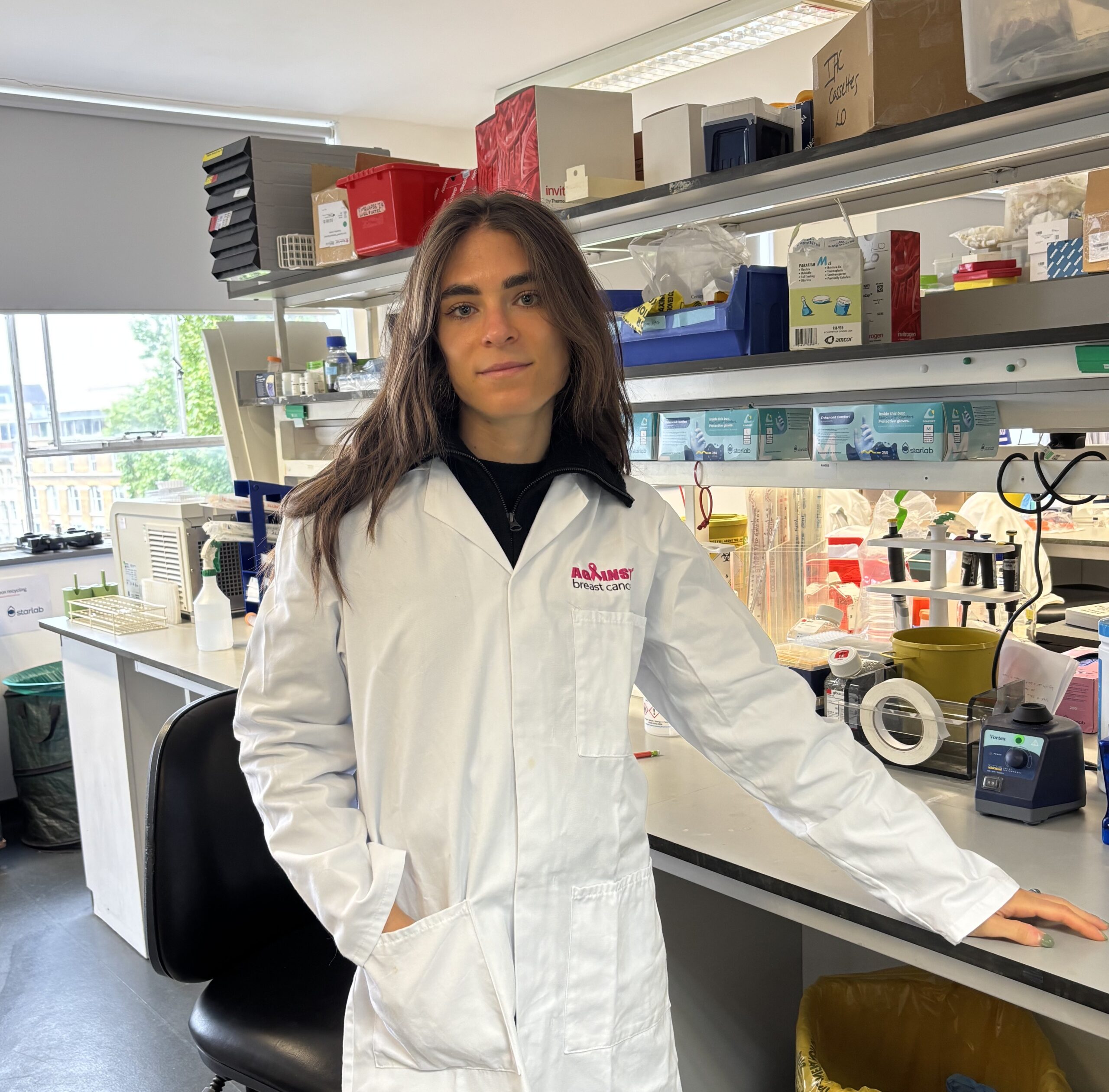 Researcher: Dr Ludovica Tarantola, PhD Funding
Location: Barts Cancer Institute, Queen Mary, University of London
Dates: Jan 2026 – Sept 2026 Status: Completed
Research Theme: Therapies
Ludovica’s PhD research has focused on understanding how the tumour environment, known as the extracellular matrix (ECM) affects immune cells and prevents them from effectively fighting breast cancer.
In previous studies, Ludovica has studied how chemotherapy can unintentionally change the tumour ECM, making breast cancer more resistant to treatment by weakening the immune response. Chemotherapy can increase certain glycoproteins in the ECM that form part of the “glycan shield”, identified in previous work by Dr Oliver Pearce. Glycans, which consist of chains of sugar molecules, form a barrier, preventing immune cells from entering the tumour and mounting a strong anti-cancer response.
Using multi-omic profiling of triple-negative breast cancer (TNBC) tissue samples, the immunosuppressive properties of the tumour ECM were shown to driven in part by glycan (sugar) modifications attached to ECM proteins, particularly glycans containing sialic acid.
To test the importance of these glycans, the team removed them enzymatically from TNBC tissue. This altered the immune landscape of the tumour. Macrophages, which often adopt a tumour-supporting role in cancer, had their pro-tumour activity dampened. At the same time, cancer-fighting T-cells entering the tumour increased, supporting the idea that the “glycan shield” normally acts as a barrier that limits effective anti-tumour immune responses.
In summary, Ludovica’s work has shown that specific types of glycans in the ECM determine whether cancer-fighting T-cells or tumour-promoting macrophages predominate in the TNBC tissues, revealing ECM glycosylation as a previously underappreciated regulator of immune activity in TNBC.
These important discoveries, supported by Against Breast Cancer, were published in the Nature Communications (May 2026) and now pave the way to novel therapeutic strategies to improve the effectiveness of immunotherapies in patients with TNBC.
In September 2026, Ludovica successfully defended her PhD thesis in a viva voce examination at the Barts Cancer Institute.
Publications
Glycosylated extracellular matrix drives immune suppression by modulating macrophage-T cell crosstalk in triple-negative breast cancer. Tarantola, L., Tyler, E.J., Liu, Y. et al. Nat Commun 17, 5008 (2026).